
Cambodian Cuisine Guide
Khmer Food, Flavors, Ingredients & Traditions
About This Guide
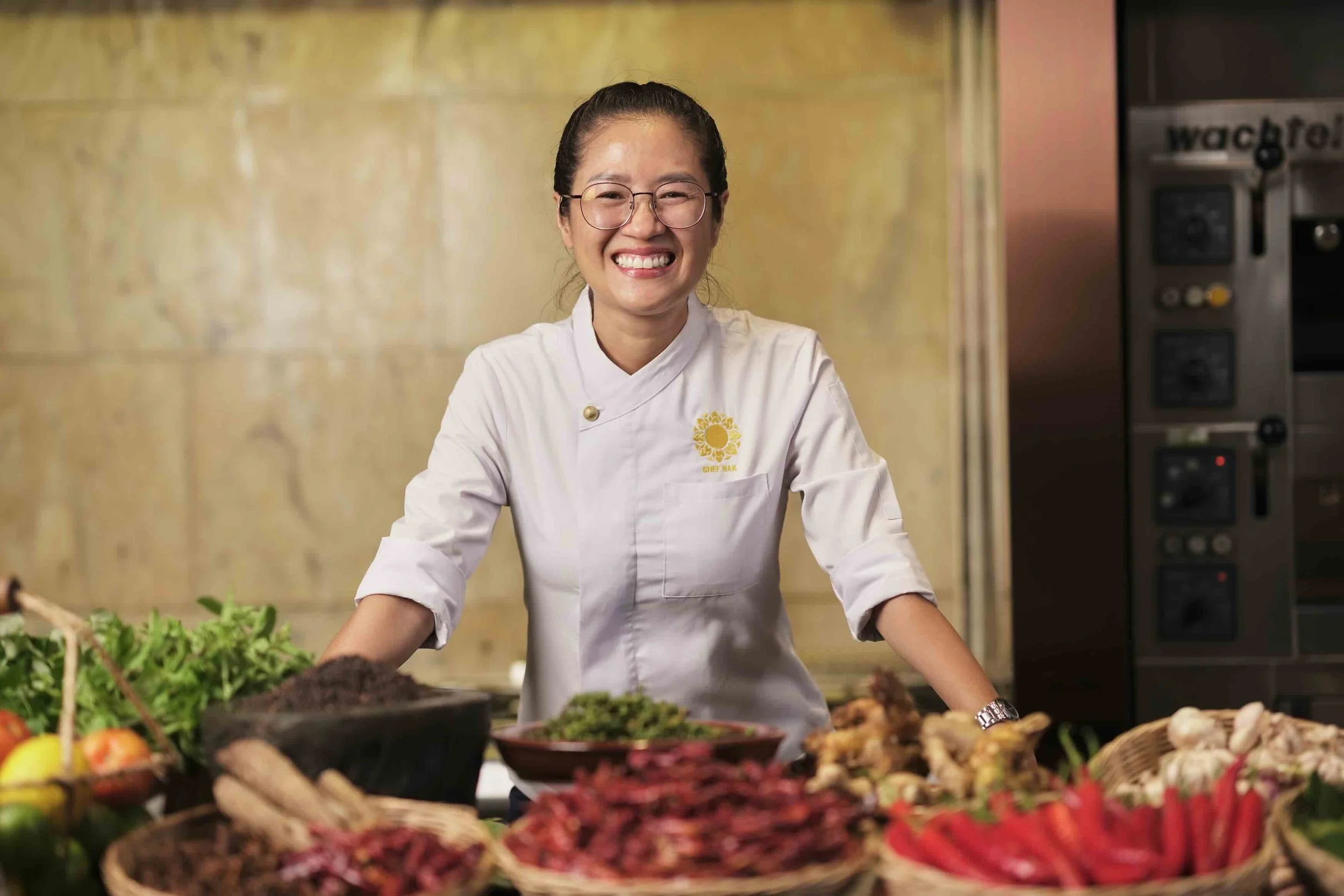
This guide is written by Chef Nak as part of her ongoing work to preserve, elevate, and share Cambodia’s living culinary heritage. It brings together her culinary research, cookbook work, and knowledge learned from Cambodian families, elders, home cooks, ingredients, and regional food traditions to introduce the flavors, techniques, and cultural knowledge that shape Khmer cuisine.
Through this guide, Chef Nak offers a Cambodian perspective on our food—helping readers understand Cambodian cuisine not simply as a collection of dishes, but as a living cultural practice shaped by people, place, memory, seasonality, and generations of knowledge.
Explore the history, flavors, ingredients, techniques, dishes, and traditions that make Cambodian cuisine distinctive
What Is Cambodian Cuisine?
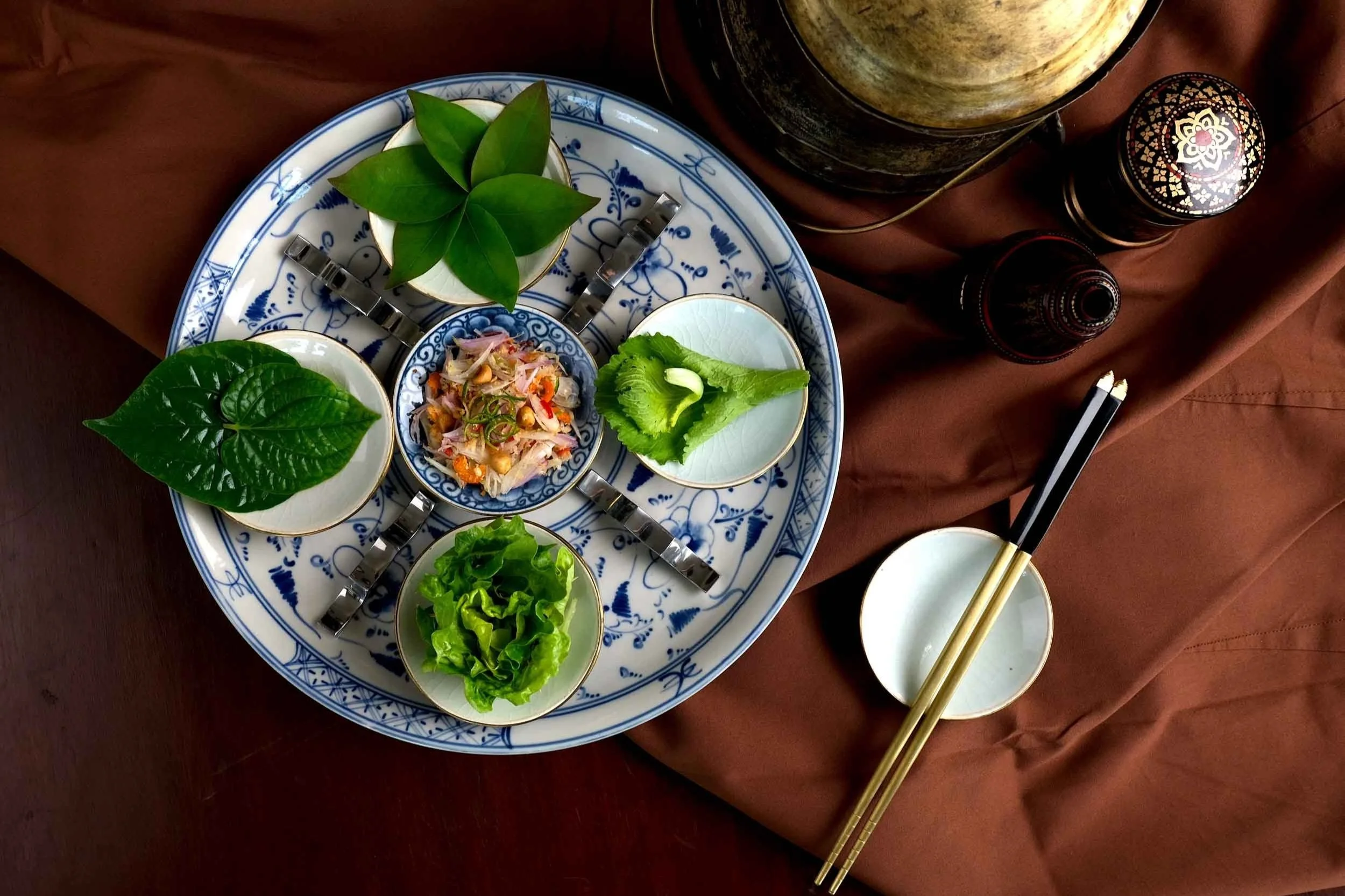
Cambodian cuisine, also known as Khmer cuisine, is Cambodia’s living culinary tradition, shaped by its rice growing culture, freshwater ecosystems, regional landscapes, seasonality, and generations of household knowledge. Deeply connected to Cambodia’s land and water, from the Mekong and Tonle Sap to its rice fields, forests, farms, and coastlines, it is distinguished by aromatic ingredients, fermentation and preservation, abundant seasonal produce, and a careful philosophy of flavor balance.
Rice and freshwater fish are central to everyday Cambodian food, alongside vegetables, herbs, fruits, meats, seafood, and a rich tradition of preservation and fermentation. Ingredients such as prahok, pa’ork, kapi, and fish sauce bring depth and savoriness, while fresh herbs, roots, leaves, and seasonal produce bring fragrance, brightness, and freshness.
Another important foundation of Khmer cooking is kroeung, a pounded aromatic paste commonly prepared with ingredients such as lemongrass, galangal, turmeric, kaffir lime leaf, garlic, and shallot. Cambodian cooking is guided by balance bringing together salty, sour, sweet, and umami flavors, sometimes with gentle bitterness or heat. Sourness holds a particularly important place in Khmer food, appearing throughout soups, sauces, salads, dips, and everyday dishes.
Cambodian cuisine has also been shaped by periods of hardship and disruption, particularly during the conflicts of the twentieth century, the Khmer Rouge period, and the years of civil war that followed. When food and resources were scarce, families often had to rely on what was available, stretching ingredients, foraging, preserving, substituting, and finding ways to create nourishment from very little. This resourcefulness became part of the lived experience of Cambodian cooking, while war and displacement also interrupted the transmission of recipes and culinary knowledge between generations.
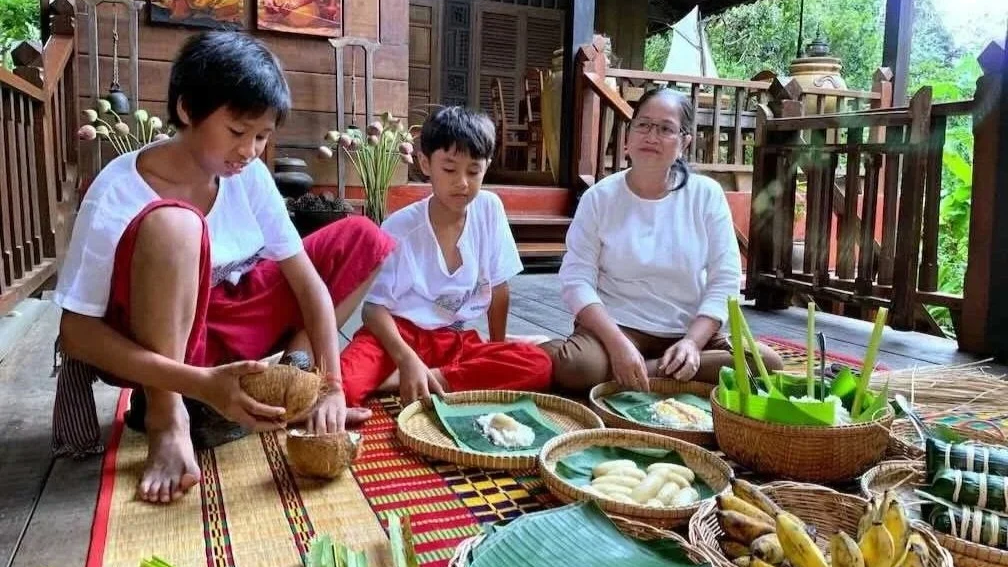
Yet many traditions survived through memory, family practice, and the determination of people who continued to cook and share what they knew. For generations, much of Cambodia’s culinary knowledge was passed from person to person rather than written down, through cooking together, watching, tasting, remembering, and repeating.
These recipes, techniques, and ways of understanding food have been carried through families and communities, making Cambodian cuisine not only a way of eating, but also a living expression of memory, identity, place, resilience, and inherited knowledge. Today, preserving Cambodian cuisine also means documenting and carrying forward knowledge that might otherwise be lost.
What Makes Cambodian Cuisine Unique?
Cambodian cuisine is distinctive for the way it brings together geography, seasonality, regional diversity, aromatic ingredients, fermentation, and a deeply rooted philosophy of balance. Cambodia’s rice fields, rivers, lakes, forests, mountains, farms, and coastlines each contribute different ingredients and culinary traditions, creating a cuisine that can vary significantly from one part of the country to another.
At the heart of Khmer cooking is balance rather than intensity. Salty, sour, sweet, and umami flavors are carefully brought together, sometimes with gentle bitterness or heat, so that no single element overwhelms the others. Cambodian food is therefore not generally defined by spiciness; its character often comes instead from fragrance, freshness, depth, and the relationship between contrasting flavors and textures.
One of its most distinctive qualities is the meeting of freshness and fermentation. Fresh herbs, vegetables, roots, leaves, flowers, and seasonal fruits bring brightness and aroma, while ingredients such as prahok, pa’ork, kapi, and fish sauce provide depth, savoriness, and complexity. Kroeung—the freshly pounded aromatic paste used in many dishes—adds another important layer through ingredients such as lemongrass, galangal, turmeric, kaffir lime, garlic, and shallot.
Cambodian cuisine is also remarkably seasonal and resourceful. Cooks have long adapted to what the land and water provide at different times of year—preserving ingredients when they are abundant, using different parts of plants and animals thoughtfully, substituting according to availability, and transforming simple ingredients through fermentation, pounding, grilling, simmering, drying, pickling, and other techniques.
Regional traditions add further richness. Food around the Tonle Sap and Mekong reflects Cambodia’s extraordinary freshwater resources; coastal provinces bring seafood, sea salt, seaweed, and other maritime ingredients; forest and upland communities draw on different herbs, plants, and local produce; while rice-growing regions have developed their own dishes, preservation methods, and seasonal food traditions.
What ultimately gives Cambodian cuisine its identity is not one ingredient or one famous dish, but the way these elements come together: land and water, freshness and fermentation, seasonality and preservation, simplicity and refinement, inherited knowledge and continuing creativity.
Khmer cuisine is therefore both diverse and deeply connected—a culinary tradition shaped by place, memory, adaptability, and the Cambodian understanding that good food is not about excess, but about balance, care, and harmony.
History of Khmer Cuisine
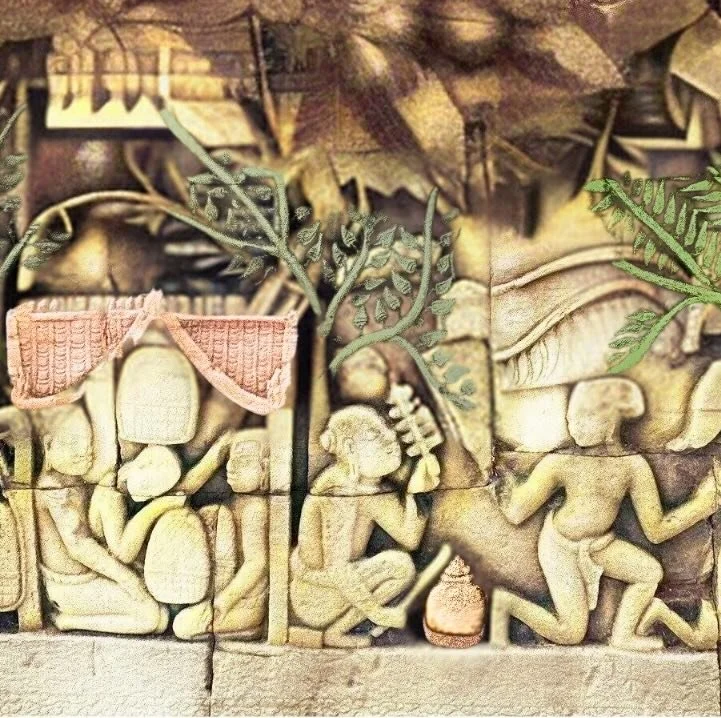
Khmer cuisine has evolved over centuries through Cambodia’s relationship with its land, water, agriculture, beliefs, communities, and encounters with the wider world. Its foundations were shaped by a rice-growing society nourished by the Mekong River, Tonle Sap Lake, seasonal waterways, forests, farms, and an extraordinary diversity of freshwater and agricultural resources.
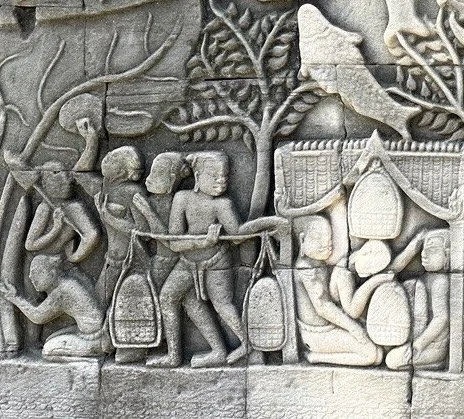
During the Angkorian period, the Khmer Empire developed sophisticated systems for managing water and supporting agriculture. Reservoirs, canals, dykes, and other hydraulic structures helped sustain large communities and a civilization deeply connected to rice cultivation and the seasonal movement of water. This relationship between land and water remains fundamental to Cambodian food today.
Over time, Khmer cuisine continued to develop through trade, migration, religion, regional exchange, and later contact with other cultures. New ingredients and techniques were absorbed and adapted according to Cambodian tastes and ways of cooking. At the same time, distinct culinary traditions developed across households, villages, regions, religious life, and the royal court—from simple everyday food to highly refined preparations.
Much of this culinary knowledge was traditionally passed from one generation to another through practice rather than written recipes. Children learned by watching parents and grandparents; cooks developed judgment through touch, smell, taste, and repetition. Knowledge of ingredients, preservation, fermentation, seasonality, and preparation lived largely in the memories and hands of the people who cooked.
The twentieth century brought profound disruption. War, political upheaval, the Khmer Rouge period, displacement, and the years of civil conflict that followed changed Cambodian life dramatically. Families and communities were separated, resources became scarce, and the normal transmission of cultural knowledge was interrupted. During periods of severe deprivation, people often had to survive with whatever food was available—gathering, substituting, stretching, preserving, and finding ways to create nourishment from very little. The Khmer Rouge period is documented as having severely disrupted the transmission of other orally transmitted Cambodian cultural traditions as well, illustrating the wider impact of that period on knowledge carried from person to person.
Yet Cambodian culinary knowledge endured. Recipes survived in family memories, everyday practices, village traditions, religious ceremonies, regional communities, and among people who continued to cook and teach what they remembered. In the generations that followed, Cambodian families rebuilt not only their lives but also many of the food traditions that connected them with home, identity, and one another.
Today, Khmer cuisine carries all of these histories within it: agricultural abundance and scarcity, everyday practicality and royal refinement, continuity and disruption, inherited tradition and adaptation. Ingredients such as prahok and other fermented foods speak to generations of preservation and resourcefulness, while kroeung, fresh herbs, seasonal produce, rice, fish, and regional specialties continue to express Cambodia’s close relationship with its environment.
Understanding the history of Khmer cuisine therefore means understanding more than the origin of particular dishes. It means recognizing food as a form of living cultural memory—knowledge carried through generations, challenged by periods of enormous loss, continually adapted, and still being preserved, practiced, documented, and shared today.
Philosophy of Cambodian Flavors
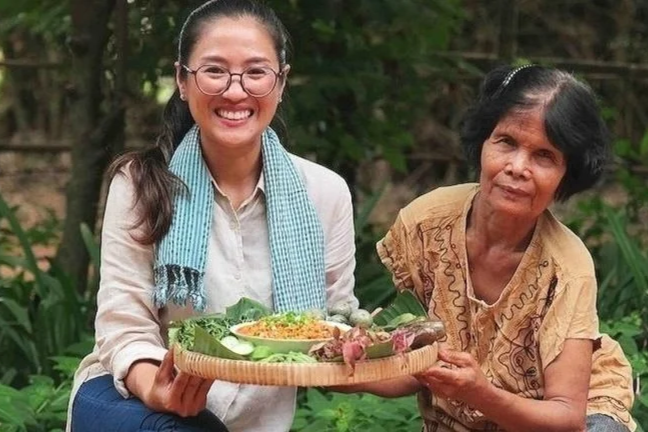
The philosophy of Cambodian flavor begins with balance. Khmer cooking rarely asks one taste to dominate. Salty, sour, sweet, and umami are brought together thoughtfully, sometimes joined by bitterness, gentle heat, fragrance, or freshness, so that each element supports the others and the dish feels complete.
This balance is not created by following one fixed formula. It comes through tasting, adjusting, and understanding the ingredients in front of you. A cook may add sourness to awaken a rich dish, sweetness to soften acidity or saltiness, fresh herbs to lift something deeply savory, or bitterness to bring contrast and character. The goal is harmony rather than intensity.
Sourness has a particularly important place in Cambodian cooking. It may come from tamarind, lime, young fruits, fermented ingredients, leaves, or other seasonal sources. It brings freshness and appetite to soups, salads, sauces, dips, and many everyday dishes, and its character can change considerably depending on the ingredient used.
Another defining relationship is the meeting of freshness and fermentation. Fresh herbs, leaves, roots, flowers, vegetables, and fruits bring fragrance and brightness, while prahok, pa’ork, kapi, fish sauce, and other preserved ingredients contribute depth, savoriness, and complexity. These qualities may appear opposite, yet Cambodian cooking often brings them together within the same dish or meal.
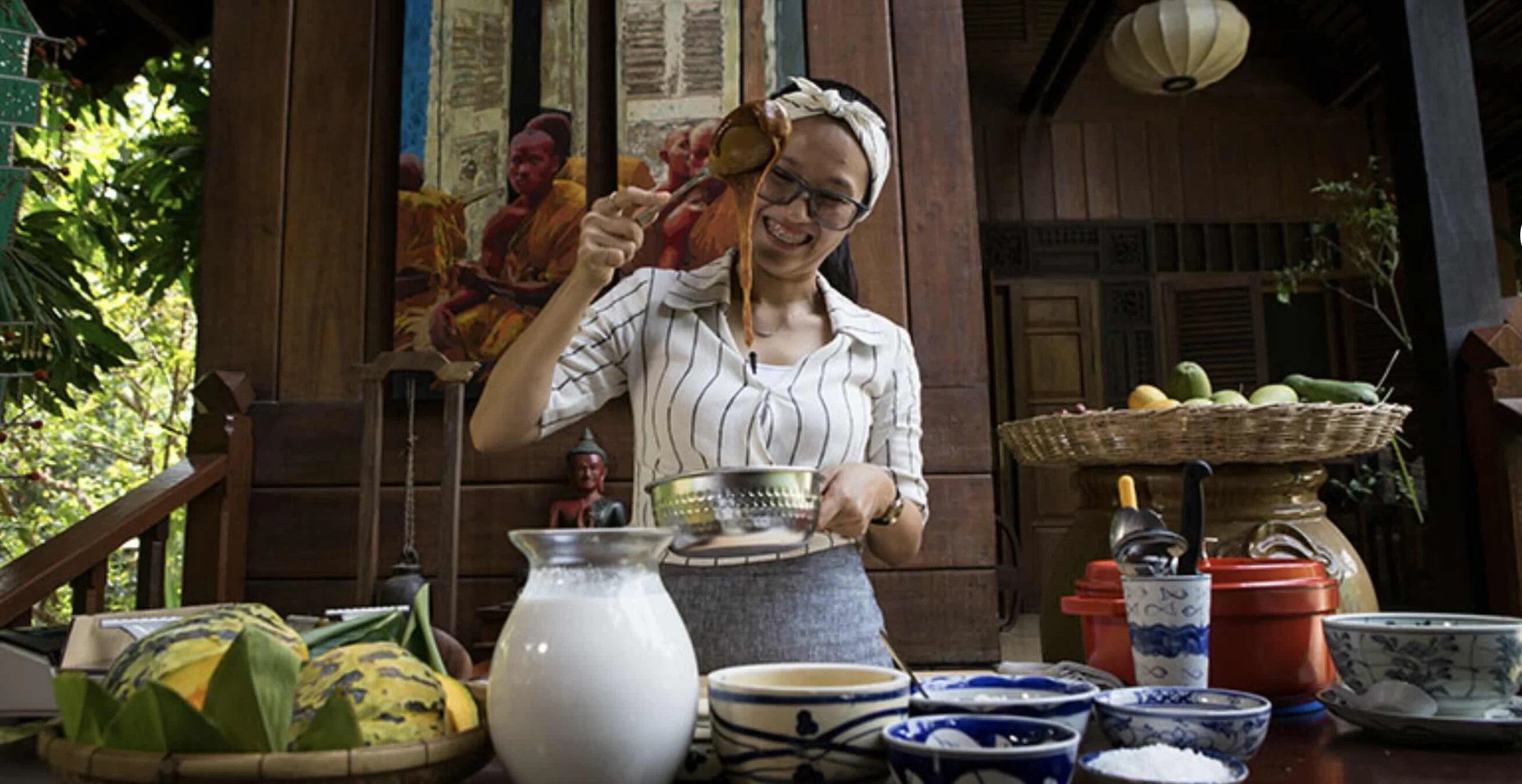
Kroeung expresses this philosophy particularly well. Aromatic ingredients are cut, pounded, and worked patiently until their individual fragrances become something deeper and more unified. The process is physical and sensory: the aroma changes, the texture softens, and the ingredients gradually become one. It demonstrates an important principle in Khmer cooking—that depth of flavor can be created through patience and technique rather than through heaviness or excessive seasoning.
Texture is also part of flavor. Cambodian meals may bring together something crisp with something soft, raw herbs with slowly cooked foods, a clear broth beside a strongly seasoned dip, or fresh vegetables alongside fermented and grilled ingredients. The experience of a dish comes not only from what the tongue tastes, but from aroma, temperature, texture, and the way different foods are eaten together.
Seasonality further shapes this philosophy. Ingredients naturally change throughout the year, and Cambodian cooks have traditionally responded to what is available—adjusting sourness, herbs, vegetables, fruits, preservation methods, and preparations according to the season. This is one reason Cambodian cooking is better understood as a way of thinking and tasting than as a rigid set of recipes.
Ultimately, Khmer flavor is about relationships: between salty and sour, fresh and fermented, delicate and deep, seasonal abundance and careful preservation. It is a cuisine in which balance is continually tasted and felt, creating food that can be subtle yet complex, comforting yet lively, and deeply connected to Cambodia’s ingredients, environment, and inherited culinary knowledge.
Traditional Cambodian Cooking Techniques
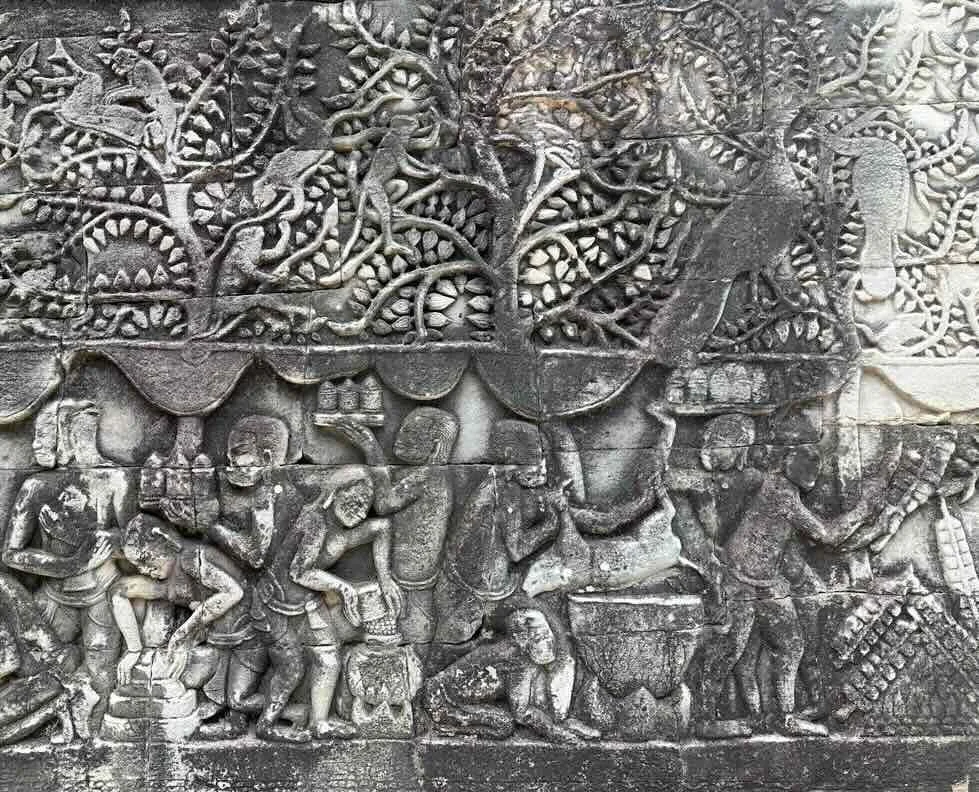
Cambodian cooking is built on techniques developed through generations of working closely with seasonal ingredients, fire, water, fermentation, and preservation. Some methods are simple, but they require experience and attention—knowing how long to pound an aromatic paste, when a broth has reached the right balance, how strongly to grill an ingredient, or when a fermented preparation has developed the desired character.
Rather than relying on one dominant technique, Khmer cooking combines many methods to create aroma, depth, freshness, texture, and balance.
Pounding Aromatics
One of the most important techniques in Cambodian cooking is pounding fresh aromatics by hand, particularly when preparing kroeung.
Ingredients such as lemongrass, galangal, turmeric, kaffir lime, garlic, and shallot are cut finely and gradually pounded together using a mortar and pestle. Pounding does more than simply make the ingredients smaller: it breaks down their fibers, releases their essential oils, and allows their aromas to blend into a unified paste.
The order, texture, and patience involved can influence the final flavor. A properly prepared kroeung becomes the aromatic foundation for many soups, curries, marinades, stir-fries, and other dishes.
Grilling and Roasting
Cooking over charcoal or an open flame has long been an important part of Cambodian food culture. Fish, meats, vegetables, bananas, and other ingredients may be grilled directly or wrapped before cooking.
The heat creates smokiness, caramelization, and deeper flavor while allowing relatively simple ingredients to develop considerable character.
Grilled foods are often eaten with fresh vegetables, herbs, rice, pickles, or dipping sauces, creating the contrast between smoky, fresh, sour, salty, and aromatic elements that is so characteristic of a Cambodian meal.
Slow Simmering
Soups, curries, broths, and stews are central to Cambodian home cooking, and many depend on gentle simmering rather than aggressive heat.
Slow cooking allows aromatics, herbs, vegetables, meats, fish, and seasonings to release their flavors gradually and come into balance. The objective is not always richness or heaviness; Cambodian soups can be remarkably clear and delicate while still carrying layers of flavor.
Knowing when ingredients should be added is also important. Some require time to soften and release flavor, while delicate herbs and leaves may be added toward the end to preserve their fragrance and freshness.
Steaming
Steaming provides a gentle way to cook fish, rice preparations, cakes, vegetables, and other foods while maintaining moisture and delicate textures.
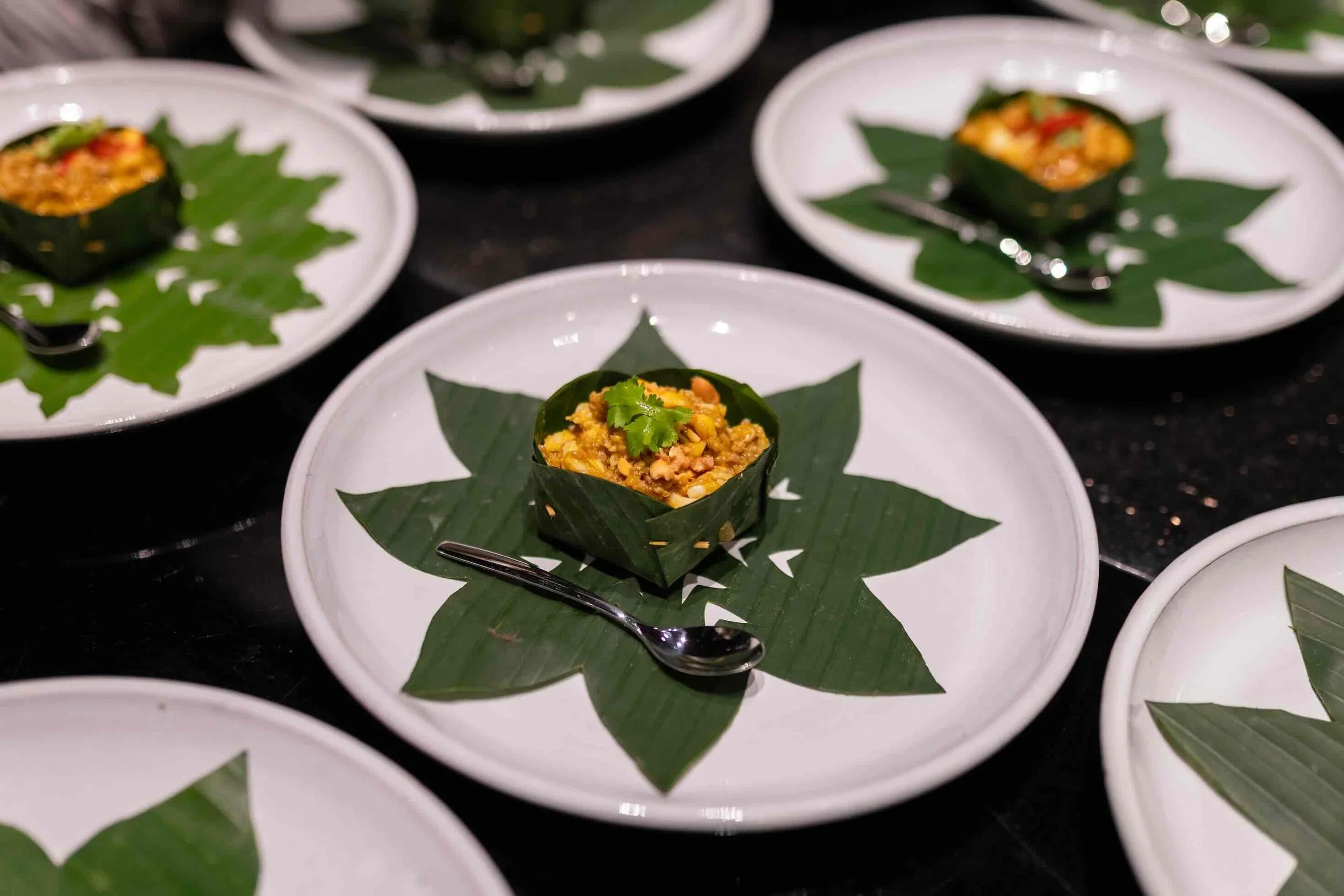
Banana leaves and other natural materials may also be used to hold or wrap food during steaming, contributing aroma while creating a practical cooking vessel.
The technique demonstrates another characteristic of Cambodian cooking: allowing the natural quality of an ingredient to remain recognizable rather than always covering it with strong seasoning.
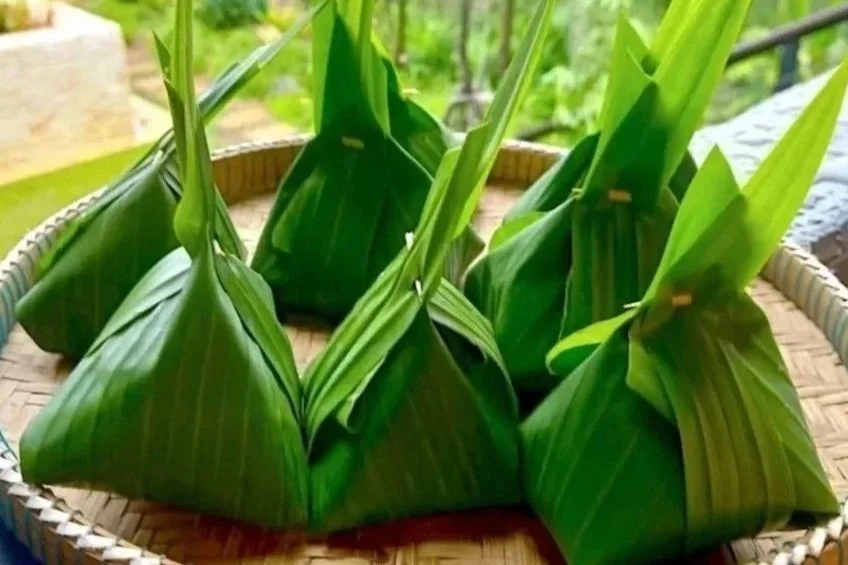
Wrapping and Cooking in Leaves
Banana leaves and other locally available leaves have long played both practical and culinary roles in Cambodian kitchens.
Foods may be wrapped before grilling, steaming, or baking, helping retain moisture and fragrance while protecting ingredients from direct heat. Leaves are also traditionally used for serving, carrying, storing, and presenting food.
This relationship between cooking and natural materials reflects a kitchen culture developed around what was readily available in the surrounding environment.
Fermentation
Fermentation is among the most important traditions in Cambodian cuisine.
Fish, seafood, vegetables, and other ingredients can be fermented to preserve seasonal abundance while developing new layers of flavor. Prahok, Cambodia's well-known fermented fish preparation, is perhaps the most recognizable example, but it forms part of a much broader Cambodian tradition of fermented and preserved foods.
Fermentation historically helped families preserve food beyond a particular season and provided powerful sources of flavor that could transform otherwise simple meals.
In Khmer cooking, fermented ingredients are not merely substitutes for fresh food. They have their own aromas, textures, and culinary identities and are used deliberately to create depth and umami.
Drying, Salting and Preserving
Before refrigeration, preservation was essential to everyday life. Fish, meats, fruits, vegetables, and other foods could be salted, dried, fermented, pickled, or otherwise preserved for use when fresh ingredients were less abundant.
Sun-drying remains particularly closely connected with Cambodia's climate and food traditions. Preserved ingredients can later be grilled, fried, simmered, or incorporated into other dishes.
These techniques reflect both practicality and culinary knowledge: understanding seasonality, moisture, salt, time, and the changes that occur as an ingredient is preserved.
Pickling
Pickling brings another important dimension to Cambodian meals.
Vegetables and fruits may be preserved with salt, sugar, vinegar, brine, or other preparations to create sourness, crunch, freshness, and contrast. Pickled foods are often served alongside grilled meats, fried foods, rice dishes, and richer preparations.
Their role demonstrates that Cambodian cooking is not only about the flavor of an individual dish, but also about how different foods balance one another at the table.
Cooking with Fire, Time and the Senses
Traditional Cambodian cooking has historically relied less on exact written measurements than on observation and experience.
A cook learns to recognize when kroeung has been pounded enough from its aroma and texture, when something grilling over charcoal has developed the right fragrance, when a broth needs more sourness or saltiness, or when a preserved ingredient has reached the right stage.
This knowledge is acquired through watching, smelling, touching, tasting, listening, and repeating—the same way many Cambodian recipes and techniques have been transmitted through generations.
For this reason, Cambodian cooking is not simply a collection of recipes. It is also a body of practical knowledge: an understanding of ingredients, seasonality, transformation, balance, and the senses that continues to live through the people who cook.
Royal Cambodian Cuisine
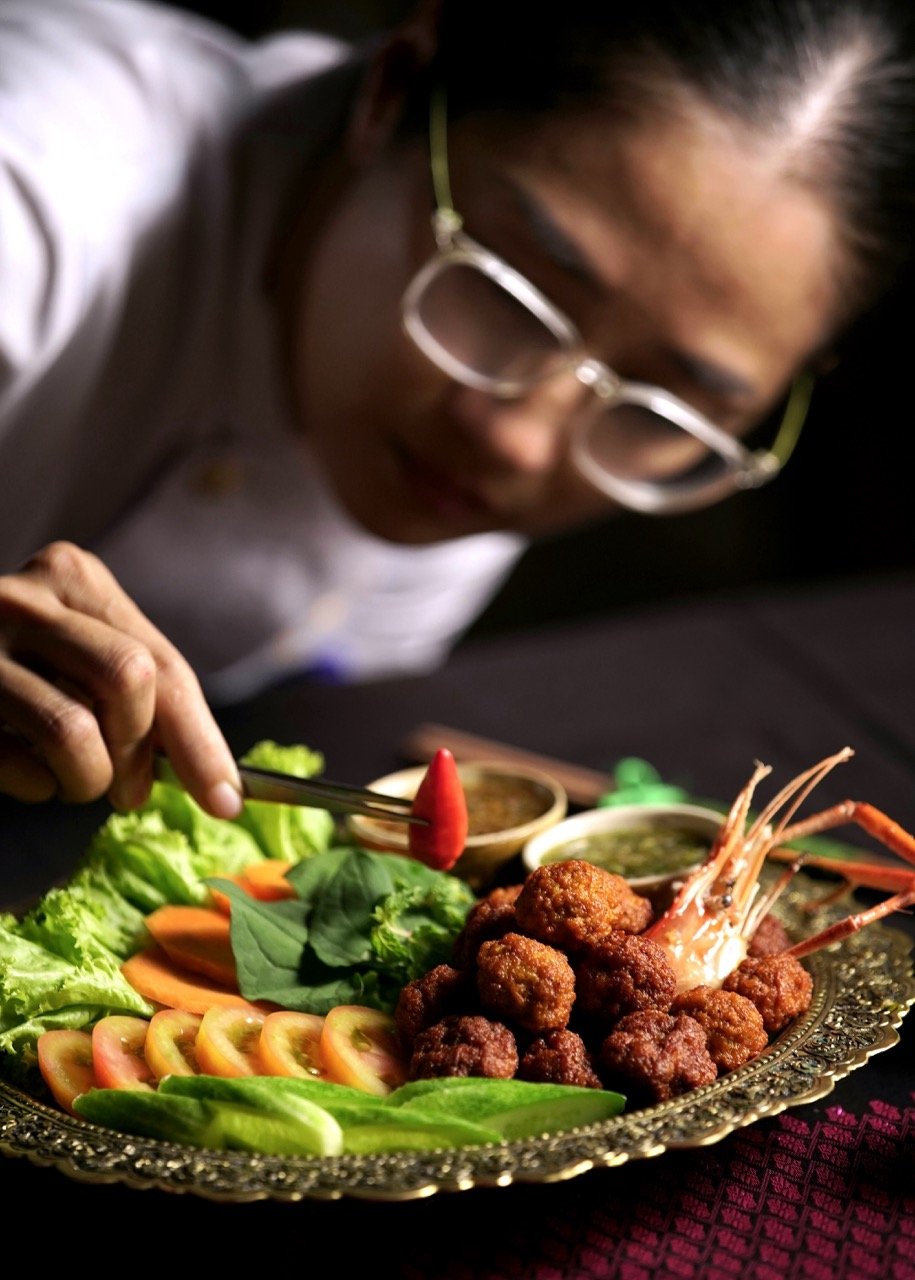
Royal Cambodian cuisine represents a distinctive and sophisticated chapter of Khmer culinary heritage, shaped within and around the royal household through traditions of careful preparation, balance, creativity, refinement, and presentation.
While everyday Cambodian cooking is deeply rooted in family kitchens, villages, markets, farms, rivers, and regional traditions, royal cuisine developed another expression of the same broader culinary culture. Familiar Cambodian ingredients and techniques could be prepared with greater delicacy and precision, with particular attention given to aroma, texture, visual presentation, and the overall harmony of the meal.
The Royal Palace was also an important setting for diplomacy and state hospitality. Foreign dignitaries, diplomats, and official delegations were regularly received and entertained, making food part of the way Cambodia presented its culture and hospitality to the outside world. Historical accounts describe refined Khmer dishes being prepared for visiting dignitaries, with great importance placed on presenting something both beautiful and delicious as an expression of Cambodian identity.
This environment also encouraged creativity and cultural exchange. Royal cooks and members of the royal household were exposed to foreign ingredients, dishes, techniques, and dining traditions. Menus could respond to the occasion and the guests being received, while outside influences were sometimes adapted to Cambodian tastes and incorporated alongside Khmer dishes. Historical collections associated with Princess Norodom Rasmi Sobbhana, for example, include Cambodian recipes alongside dishes showing Chinese, French, Indian, Lao, and other influences—evidence of a culinary culture that was confident enough to engage with the wider world while retaining its Khmer identity.
An important record of this tradition survives through recipes compiled and taught by Her Royal Highness Princess Norodom Rasmi Sobbhana during the 1960s and into 1970. Her work reveals a cuisine in which refinement was expressed not simply through expensive ingredients, but through balance, restraint, thoughtful preparation, elegant presentation, and attention to the guest. Historical accounts also describe her role in supervising Khmer dishes prepared when Prince Norodom Sihanouk received dignitaries.
Royal Cambodian cuisine is therefore particularly meaningful because it shows another dimension of Khmer food culture: cuisine not only as nourishment and tradition, but also as craftsmanship, creativity, hospitality, and cultural diplomacy.
It also reminds us that Khmer culinary heritage has always existed at many levels. Cambodia has rich traditions of everyday home cooking, regional and village food, ceremonial dishes, preservation techniques, street food, and refined royal preparations. These expressions may differ in setting and presentation, but they belong to the same larger Cambodian culinary story.
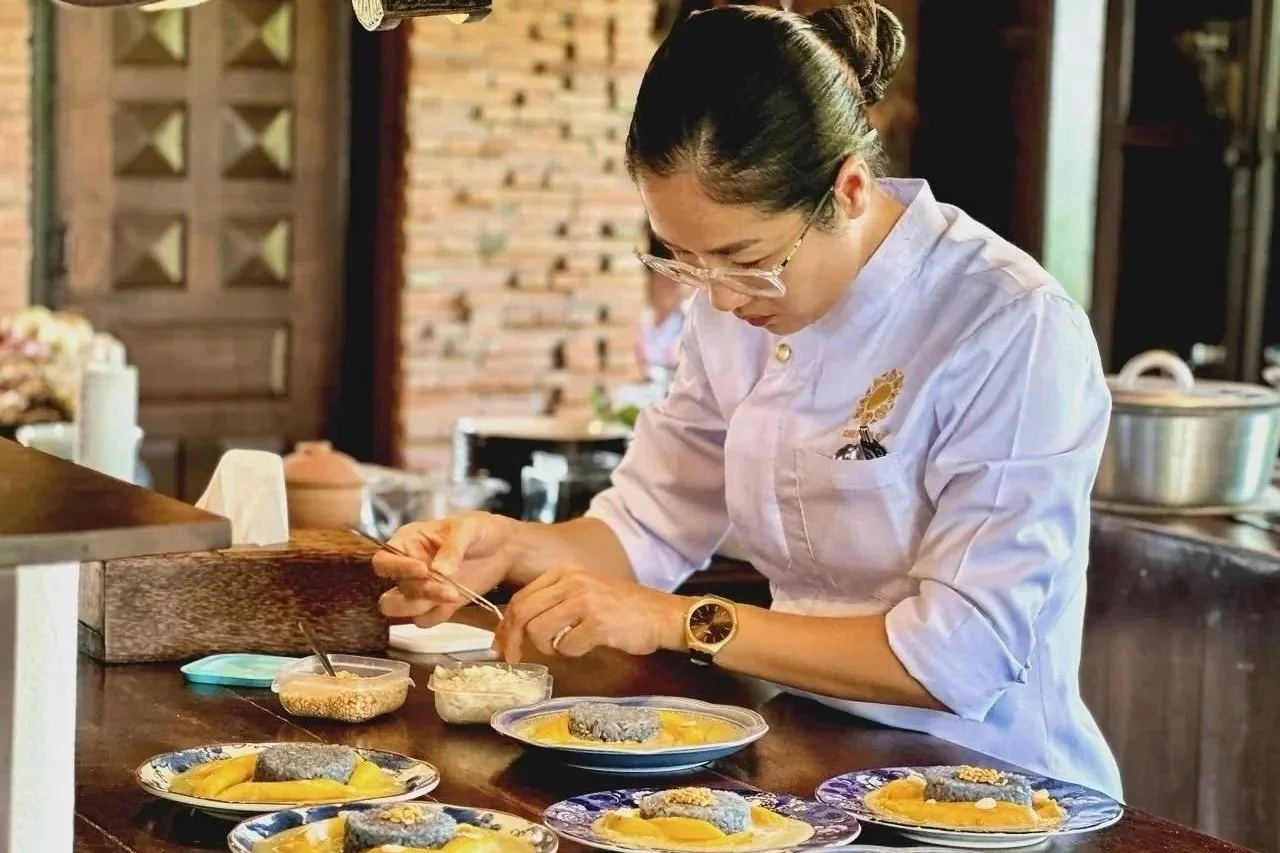
Through my research and cookbook SAOY — Royal Cambodian Home Cuisine, I, Chef Nak, have worked to document, interpret, and share this part of Cambodia’s culinary heritage for contemporary readers. The purpose is not simply to recreate the past, but to preserve the recipes, techniques, stories, and cultural context so that this knowledge can continue to be understood, practiced, and carried forward.
Royal cuisine offers a remarkable window into the depth of Cambodian food culture—where tradition and creativity, Khmer identity and international exchange, refinement and hospitality could come together at the table.
Cambodian Dining Culture
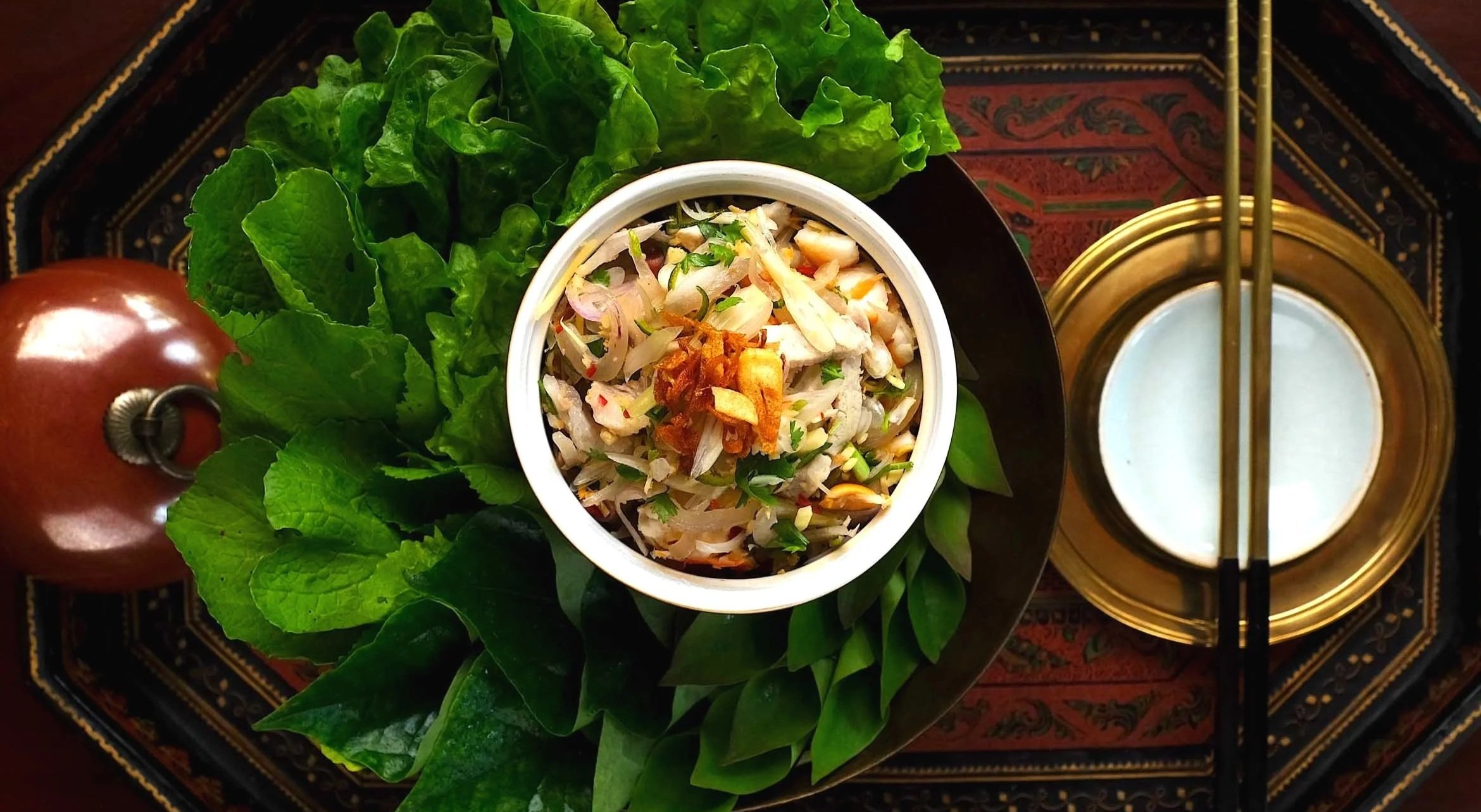
In Cambodia, food is rarely only about eating. It is closely connected to family, hospitality, generosity, respect, and togetherness. Meals create a space where people gather, talk, care for one another, welcome guests, and maintain relationships.
A traditional Cambodian meal is often built around sharing. Rather than each person ordering an individual dish, several dishes are placed together for everyone at the table. Rice is usually at the center of the meal, accompanied by a combination of soups, grilled or stir-fried dishes, vegetables, dips, fermented preparations, salads, or other seasonal foods. The dishes are intended to complement one another, allowing different flavors, textures, temperatures, and intensities to be enjoyed together.
This way of eating also reflects the Cambodian philosophy of balance. A rich or strongly seasoned dish may be eaten alongside fresh vegetables or herbs; something grilled may be balanced by a sour soup; a fermented dip may be accompanied by crisp raw produce. The meal is experienced as a whole rather than as a sequence of isolated dishes.
Hospitality holds an especially important place in Cambodian dining culture. Offering food is one of the most natural ways to welcome someone into a home. Guests may be encouraged to eat more, try another dish, or take the best portion available. Even the simple question “Have you eaten rice yet?” can function as an expression of care and concern, showing how deeply food is woven into everyday relationships.
Respect is also expressed through the way food is shared. In many families, consideration is given to elders and guests when serving or beginning a meal, and generosity toward others is valued. These customs can vary between households, generations, regions, and occasions, but the underlying spirit of sharing and looking after one another remains an important part of Cambodian hospitality.
Food also plays a central role beyond the everyday table. Cambodian families prepare and share particular foods for religious ceremonies, ancestral offerings, weddings, festivals, family gatherings, and other important moments in life. Recipes can therefore carry memories of specific people, places, celebrations, and generations.
For Cambodians, a meal can communicate things that are not always spoken directly. Cooking for someone, inviting them to eat, sending food to relatives, or preparing a remembered family dish can all be expressions of affection, respect, welcome, and belonging.
This is why Cambodian dining culture cannot be understood only by studying individual recipes. The meaning of the cuisine is also found in how food is offered, shared, remembered, and enjoyed together. At its heart, the Cambodian table is a place of connection—between family and guests, generations and traditions, and food and the stories carried with it.
Cambodian Cuisine Today
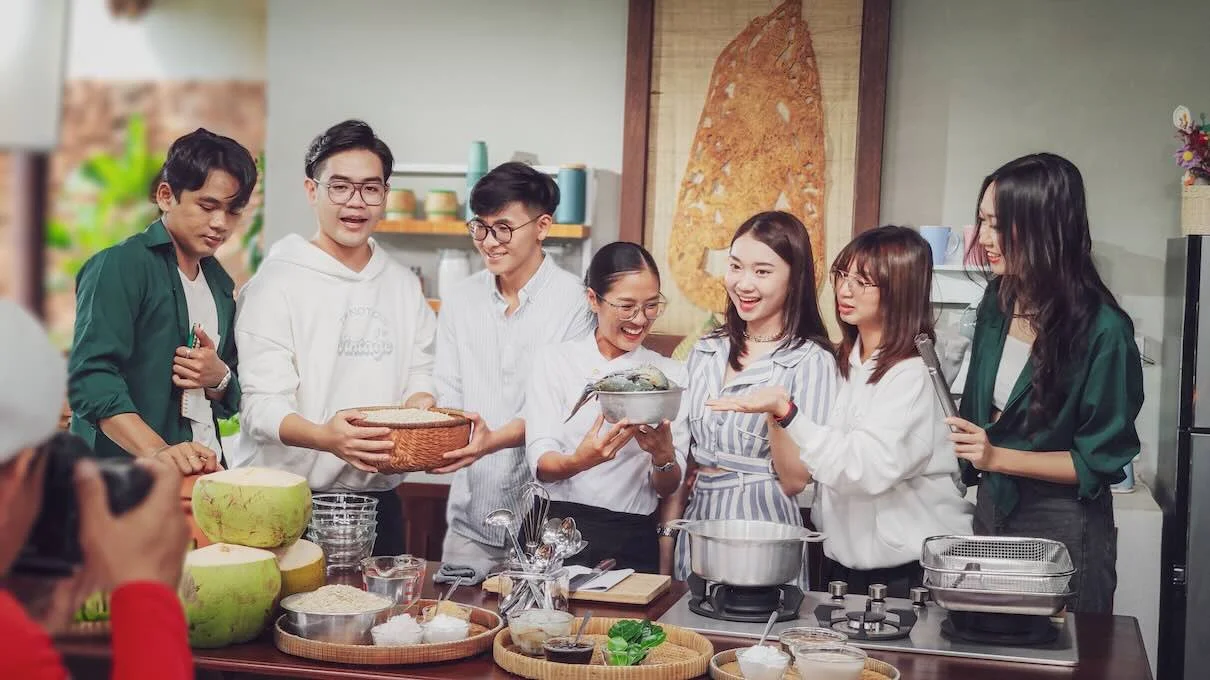
Cambodian cuisine today is both deeply rooted in tradition and continually evolving. Across homes, markets, restaurants, culinary schools, farms, hotels, and creative kitchens, Cambodians continue to cook the foods passed down through generations while also responding to changing lifestyles, new ingredients, travel, technology, and a more connected world.
For many families, everyday dishes remain remarkably familiar: soups, grilled foods, fermented preparations, fresh vegetables, rice, noodles, curries, dips, and seasonal recipes continue to form the foundation of daily eating. At the same time, younger generations are discovering new ways to prepare, present, and share these foods while adapting them to contemporary life.
This evolution is not necessarily a departure from tradition. Cambodian cuisine has always changed with seasonality, availability, cultural exchange, migration, and circumstance. What matters is understanding the foundations of a dish—its ingredients, techniques, balance, cultural meaning, and the knowledge behind it—before deciding how it can thoughtfully evolve.
Today, Cambodian chefs, cooks, researchers, writers, farmers, food producers, educators, and cultural advocates are contributing to a renewed interest in Khmer cuisine. Old recipes are being documented, regional ingredients are receiving greater attention, traditional techniques are being studied more carefully, and Cambodian food is increasingly being presented to audiences both within Cambodia and internationally.
The Cambodian diaspora has also played an important role in carrying the cuisine beyond the country’s borders. Families who rebuilt their lives abroad brought recipes, flavors, memories, and cooking traditions with them. In new environments, ingredients sometimes had to be substituted and recipes adapted, creating another chapter in the continuing story of Khmer food.
Within Cambodia, changes in lifestyle are also influencing the way people eat. Urbanization, convenience, international food culture, changing tastes, and modern food production all shape contemporary habits. Some traditional ingredients or techniques may be used less frequently in certain households, while others are being rediscovered by younger cooks interested in understanding where their food comes from.
I have also observed changes in taste between generations, including a preference among some younger diners for sweeter or stronger flavors. Such changes are a reminder that cuisine is never completely static. The challenge is not to prevent change, but to ensure that the knowledge behind Cambodian food is understood well enough for change to happen with respect and intention.
There is also growing interest in regional Cambodian cuisine. Cambodia’s provinces hold distinct ingredients, specialties, cooking methods, and food knowledge that are often less visible than a small number of nationally recognized dishes. Greater documentation and appreciation of these regional traditions can help reveal the true diversity of Khmer cuisine.
At the same time, royal culinary traditions, everyday home cooking, street food, ceremonial food, contemporary restaurant cuisine, and regional dishes are increasingly being explored side by side. Together, they show that Cambodian cuisine cannot be reduced to one style of cooking or a short list of famous dishes.
For the future of Khmer cuisine, preservation and creativity do not need to be opposites. Preservation gives us knowledge; creativity gives that knowledge new ways to live. When cooks understand the ingredients, techniques, stories, and cultural context behind a tradition, they can carry it forward thoughtfully rather than simply reproducing the past.
“Preservation gives us knowledge; creativity gives that knowledge new ways to live.” — Chef Nak
Cambodian cuisine today is therefore a cuisine in motion—remembering, recovering, adapting, creating, and sharing. Its future will be shaped not only by chefs and restaurants, but by families, farmers, elders, young cooks, researchers, teachers, writers, and everyone who continues to prepare and pass on Cambodian food.
What matters most is that the knowledge remains alive: cooked, tasted, questioned, documented, taught, and shared so that future generations can inherit not only Cambodian recipes, but also an understanding of the culture, people, and places behind them.

A Few Cambodian Dishes to Discover
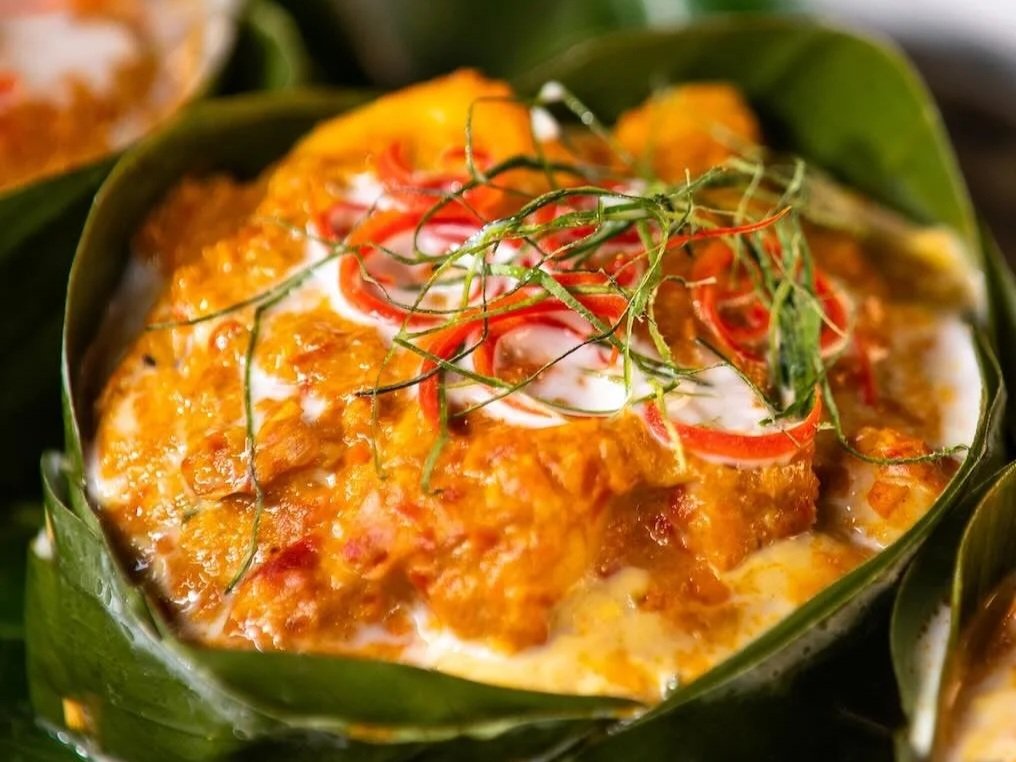
Fish Amok
Cambodia’s most iconic steamed curry, silky coconut custard, fragrant kroeung, and gentle heat, steamed in banana leaf cups until aromatic and tender. This dish, known for its balance and comfort, pairs best with Cambodian Malys Angkor rice.
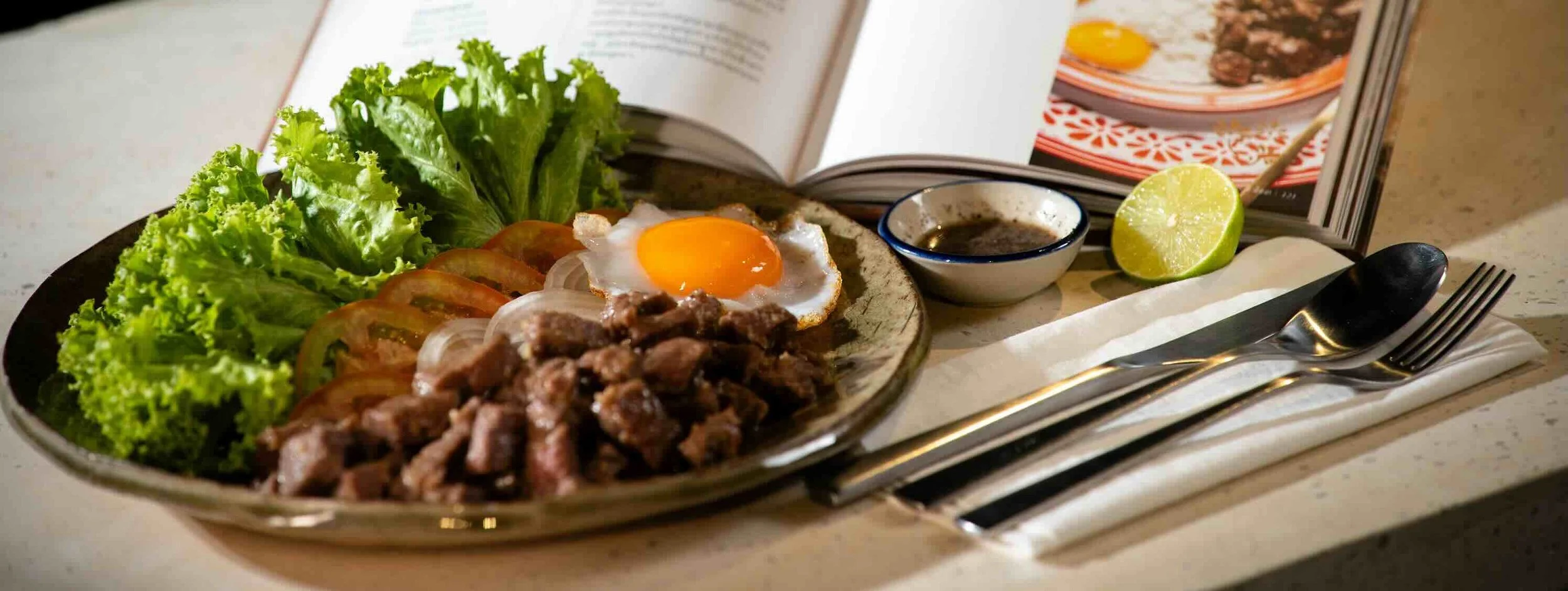
Lok Lak
Cambodia’s beloved “beef lok lak," tender cubes seared hot, served over crisp lettuce, tomatoes, and onion, with a sharp lime and Kampot pepper dipping sauce. The dish is complemented with a sunny-side egg, creating a perfect balance of richness and brightness.
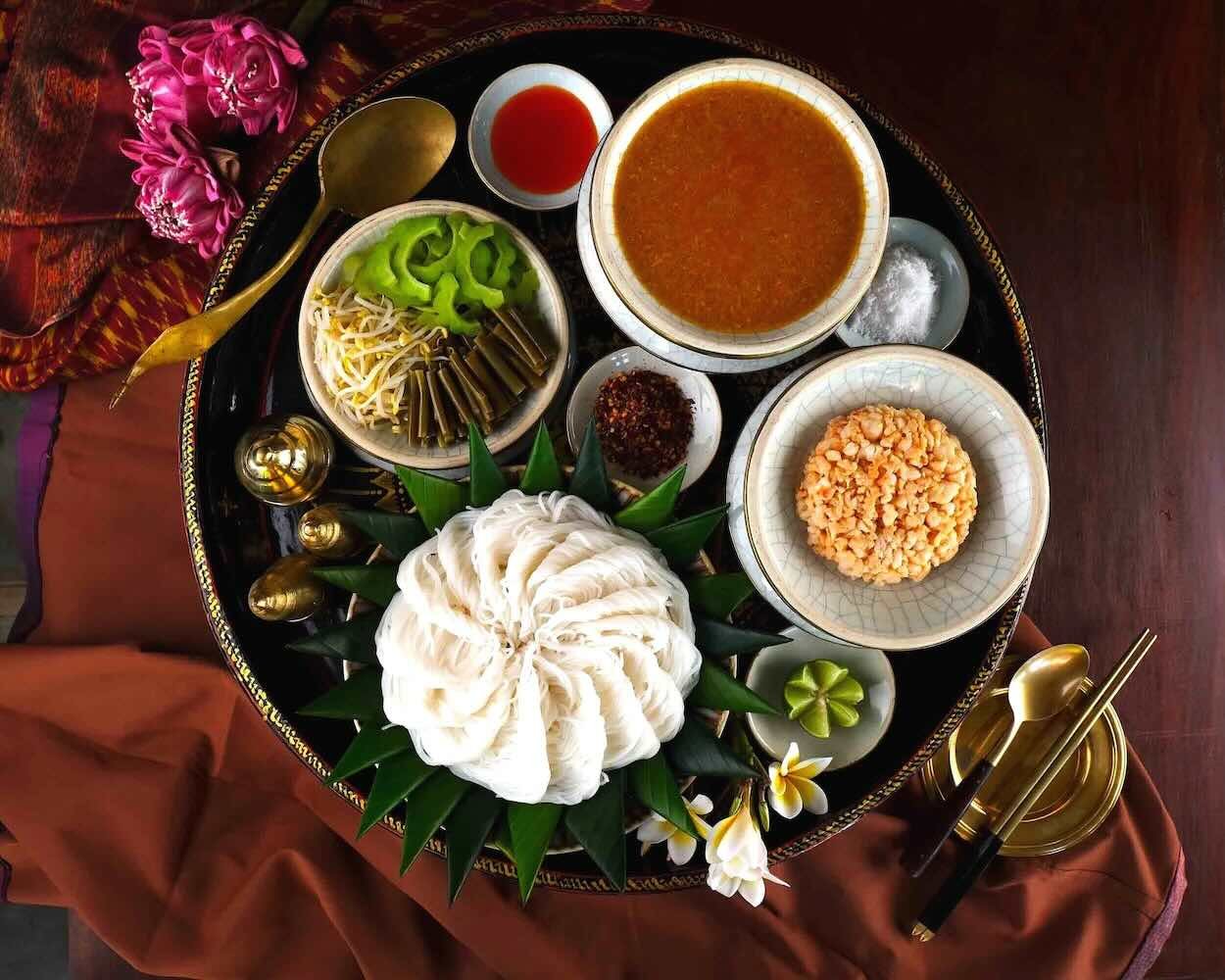
Crayfish Curry with Rice Noodles
A delicate crayfish curry inspired by a refined Cambodian royal recipe from the 1950s, served with fresh rice noodles and vibrant seasonal vegetables. The rich, aromatic curry elevates our iconic noodles, honoring Cambodia’s culinary heritage while reflecting the spirit of innovation in modern Cambodian cooking.
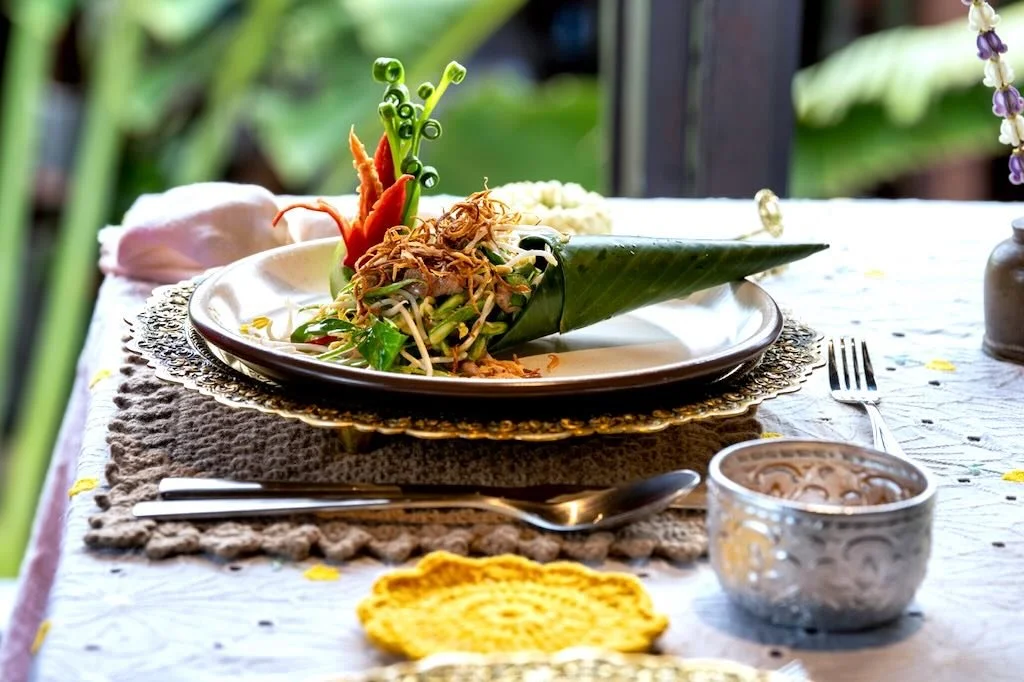
Kampot Seaweed Salad
A bright, refreshing salad featuring crisp Kampot seaweed tossed with tender pork belly, juicy shrimp, and seasonal herbs. Enhanced with Cambodia’s beloved balanced sweet, sour, and salty dressing. This dish celebrates Kampot’s coastal bounty and highlights the depth and diversity of our regional, seasonal cuisine.
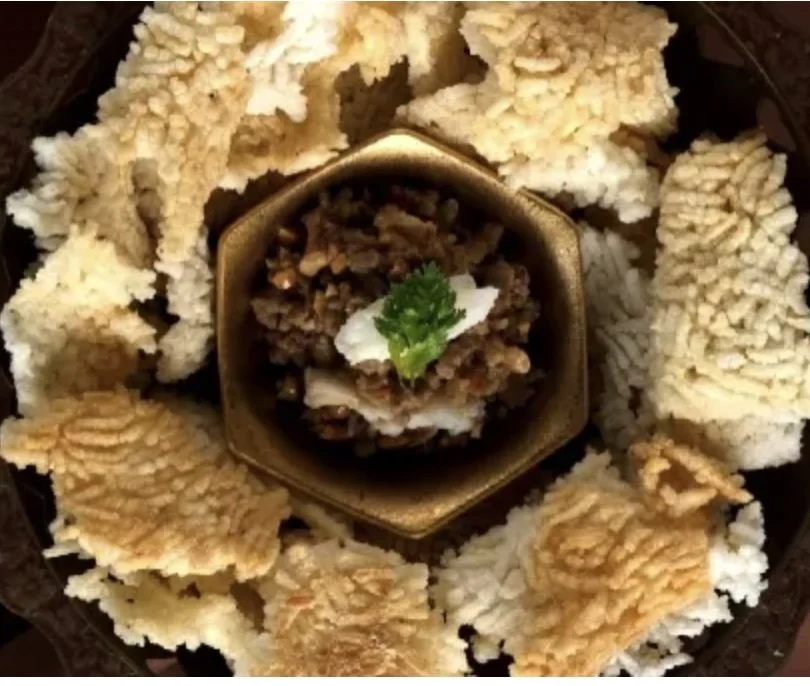
Crab Na Taing
A refined Cambodian coconut curry of hand-picked crab, gently simmered with potatoes, onions, and fragrant cilantro root. Delicately seasoned with warm aromatic spices and a subtle natural sweetness, the sauce is smooth, mild, and deeply comforting. Served with crisp rice cakes, this timeless dish reflects the understated elegance and nurturing spirit of Cambodian cuisine.
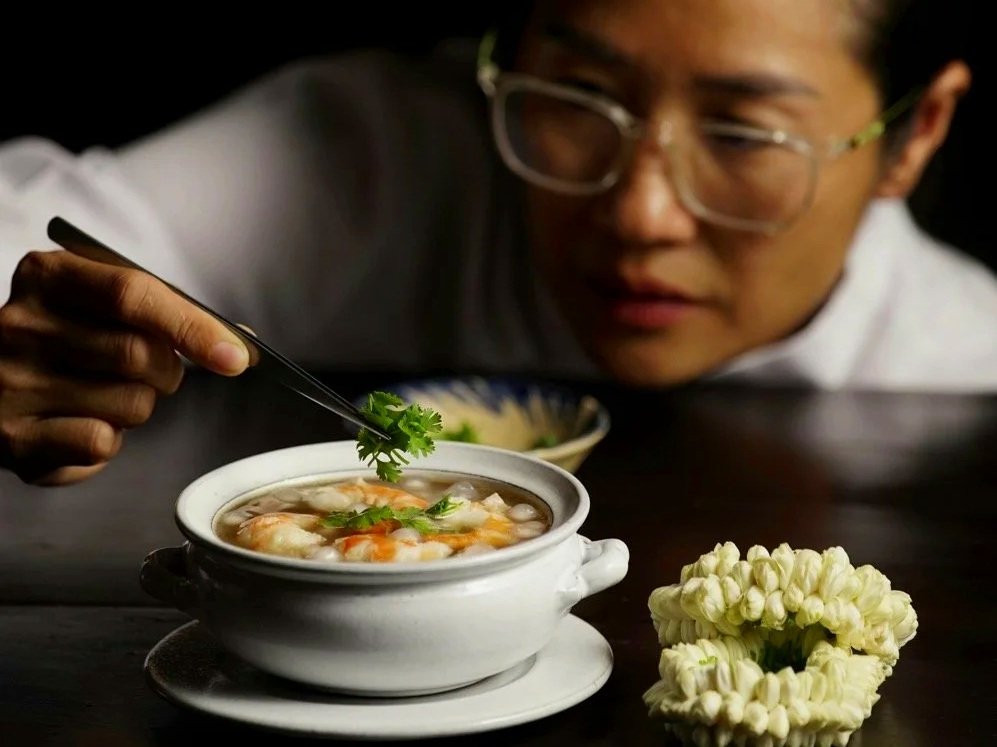
White Pearl Soup
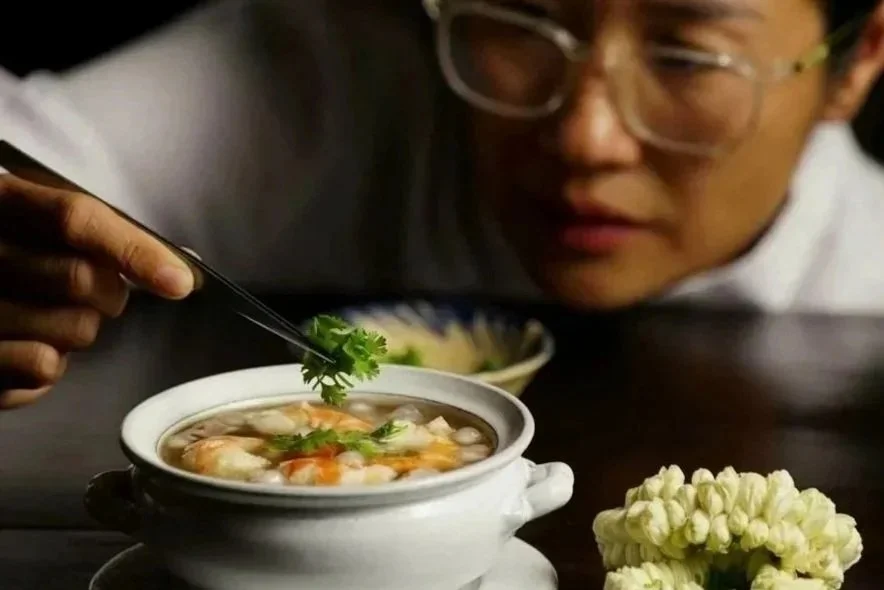
A clear, elegant broth simmered for eight hours with poultry, fragrant herbs, and Cambodia’s beloved Kampot pepper. Delicate tapioca pearls, traditionally used in desserts, and freshwater crayfish bring a gentle sweetness and a hint of royal refinement to this sophisticated, comforting soup.
Ingredients That Shape Cambodian Cuisine
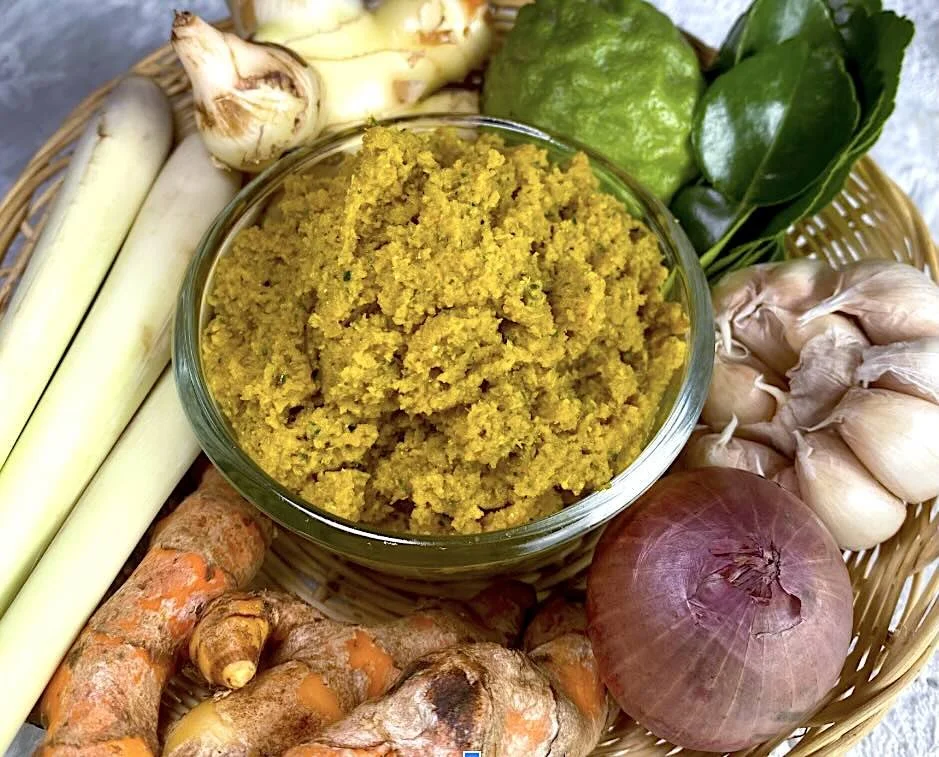
Kroeung
Kroeung is the pounded aromatic paste that forms the foundation of many Cambodian dishes, traditionally prepared in a mortar from lemongrass, galangal, turmeric, kaffir lime leaf or zest, garlic, and shallot.
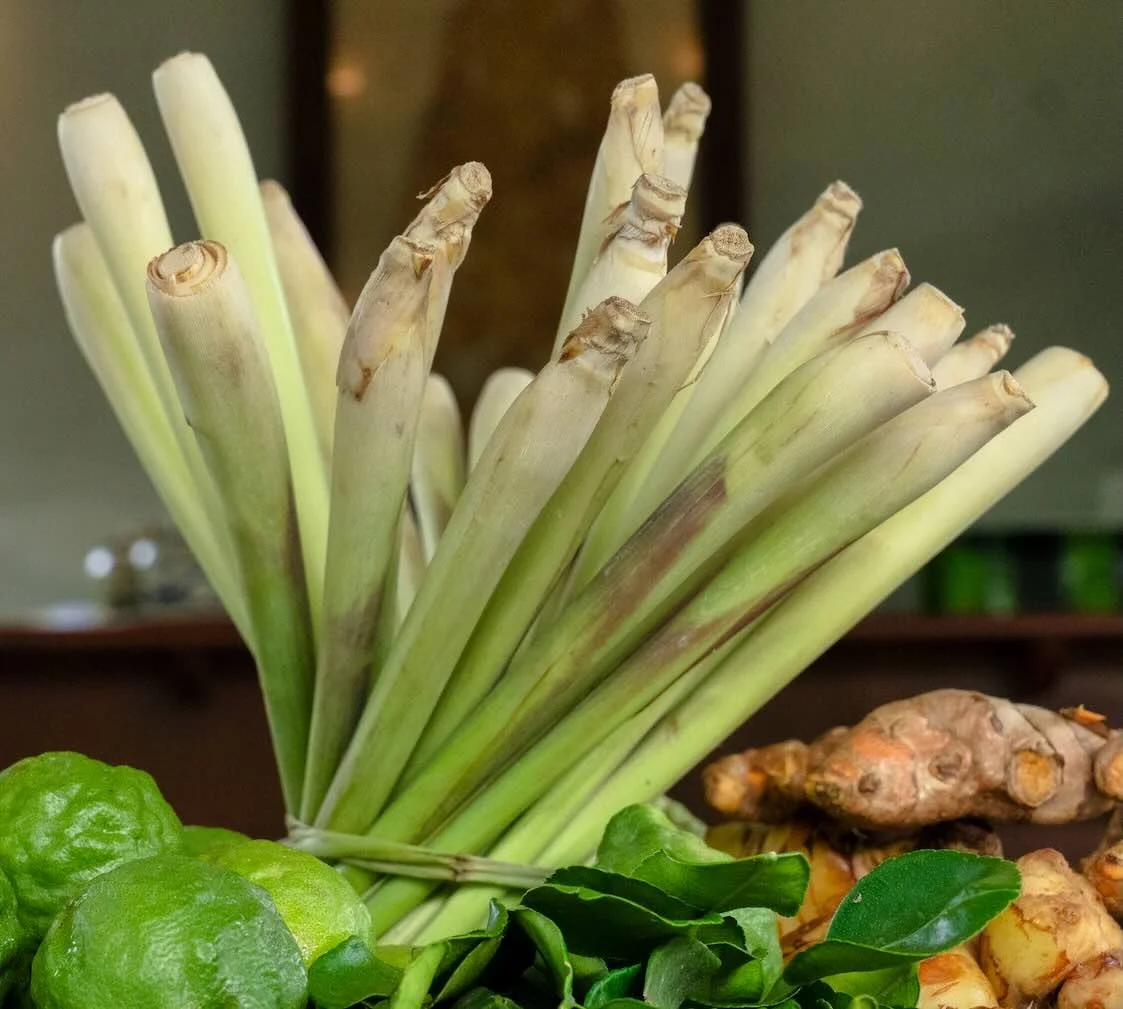
Lemongrass
Lemongrass is one of the defining aromatic herbs in Khmer cuisine and a key component of kroeung, the pounded aromatic paste that brings fragrance, freshness, and layered depth to many Cambodian dishes.
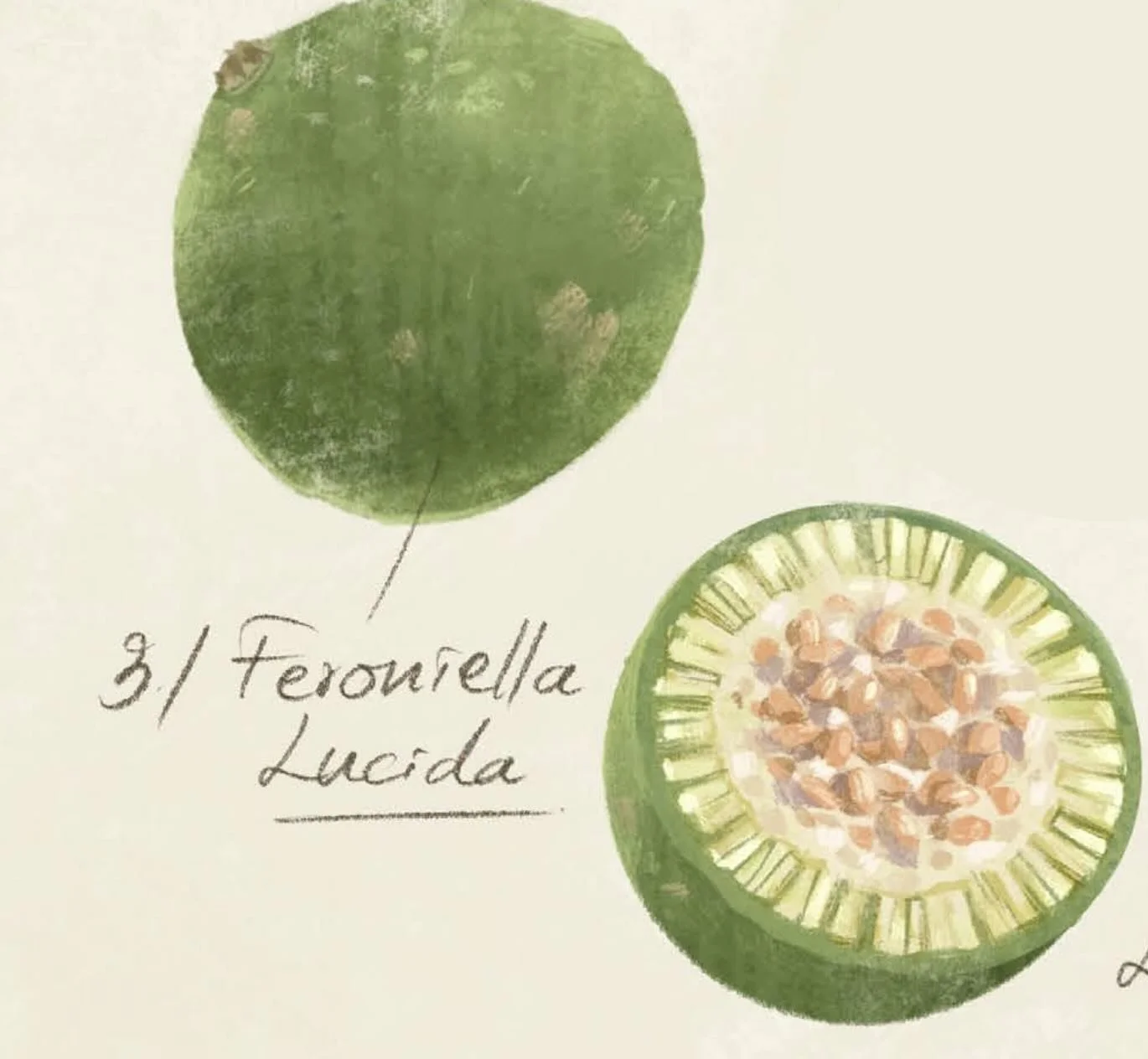
Feroniella Lucida | Krasaing
Krasaing (Feroniella lucida) is a seasonal sour fruit widely used in Cambodian cooking, especially in soups, sauces, and dipping preparations, with tamarind often used as a substitute when krasaing is unavailable. The fruit grows on a medium-sized thorny tree, usually 8–15 meters tall, with hard spines along the trunk and branches. Its young leaves and flowers are also used in Cambodian cuisine; both have a bitter, slightly spicy character and can be eaten raw or cooked, including in traditional dishes such as samlor korko.
Prahok
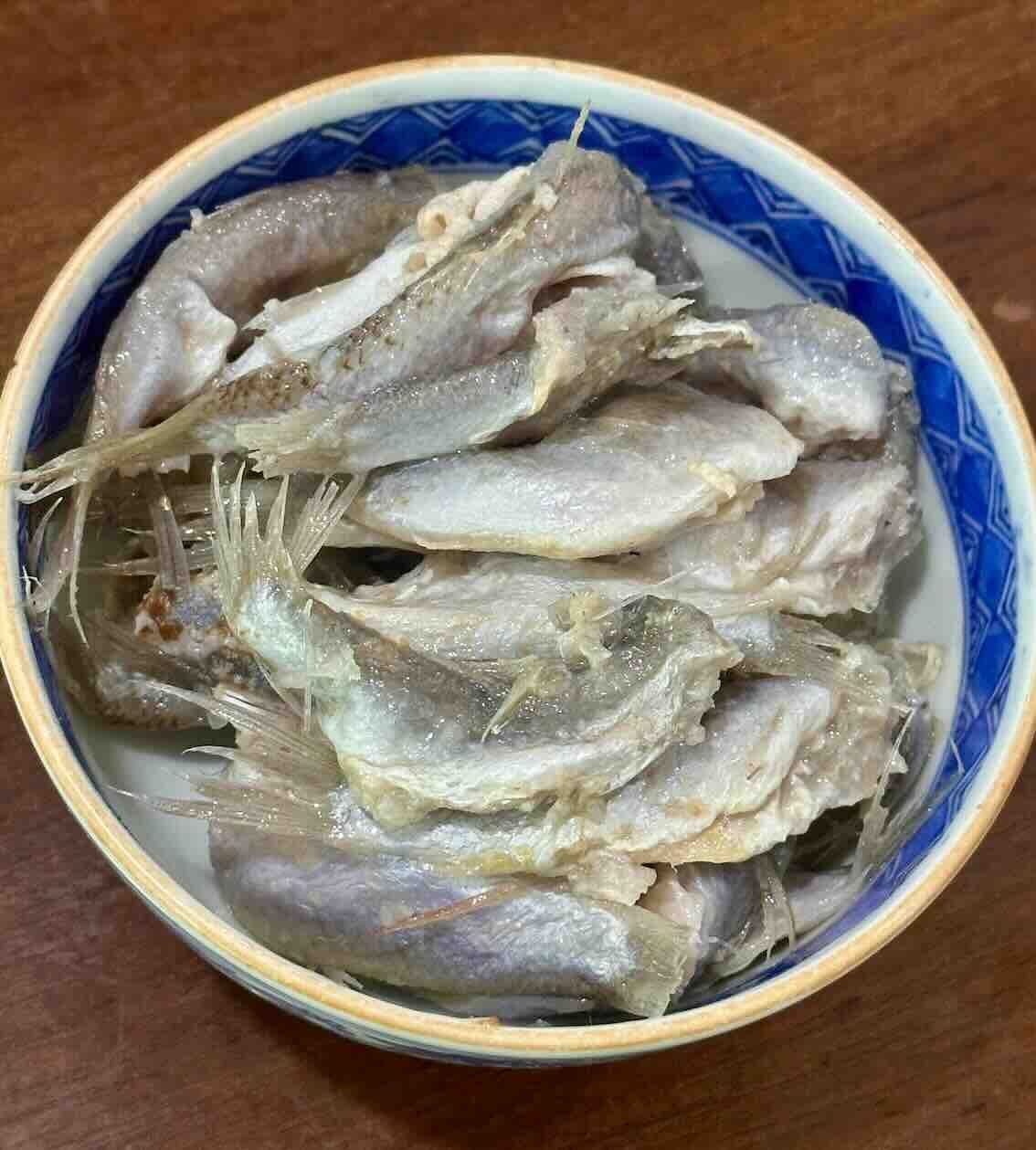
Prahok, a fermented fish paste, is a foundational ingredient in Cambodian cuisine, valued for the depth, umami, and cultural identity it brings to many dishes. It has also long been an important source of protein, especially during difficult periods in Cambodia’s history, helping sustain many families through hardship.

Palm Sugar
Palm sugar is an important traditional sweetener in Cambodian cuisine, contributing not only sweetness but also depth, softness, and balance to both savory and sweet preparations.
Kampot Sea Salt | Ambil
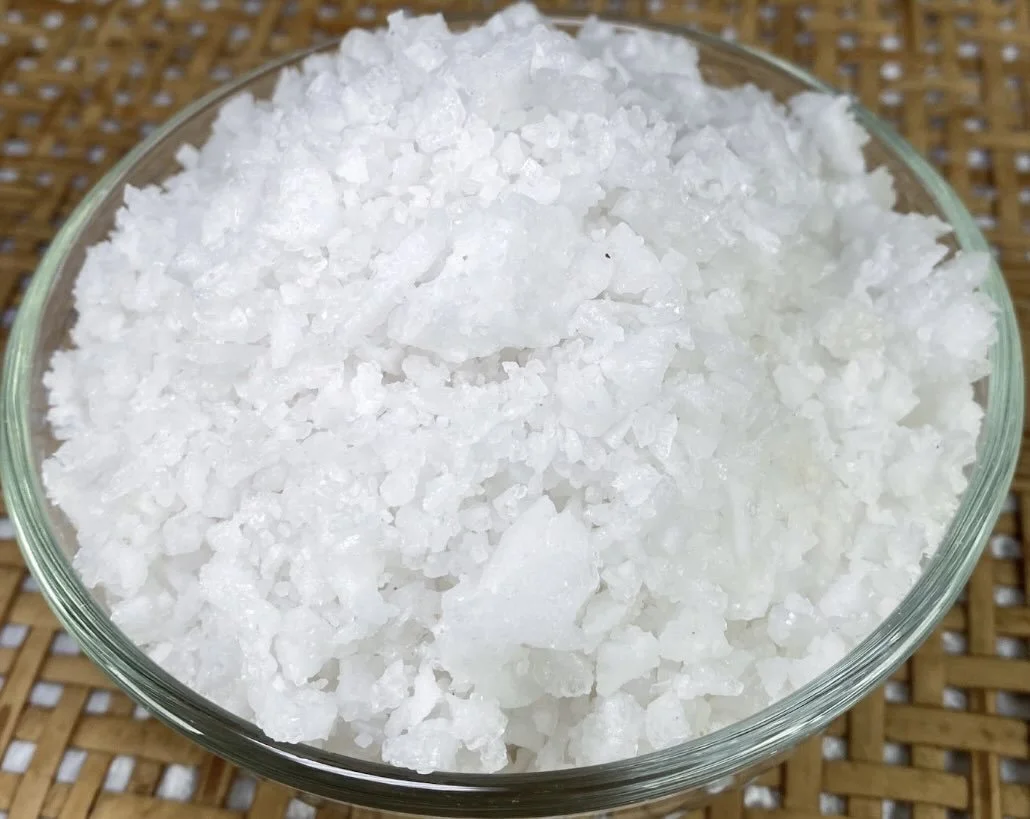
Kampot sea salt is traditionally harvested from seawater in Cambodia, mainly in Kampot Province, with March and April marking the peak harvest season. One of the most essential seasonings in Cambodian cooking, salt is used to enhance and balance flavor in everyday dishes. In addition to sea salt, other varieties such as mineral or mountain salt may also be used, depending on the region, dish, or purpose.
Guests who want to experience these flavors firsthand can join Chef Nak’s private dining or cooking classes in Phnom Penh and Siem Reap.
Num Banh Chok — Cambodia’s Fresh Rice Noodle Tradition
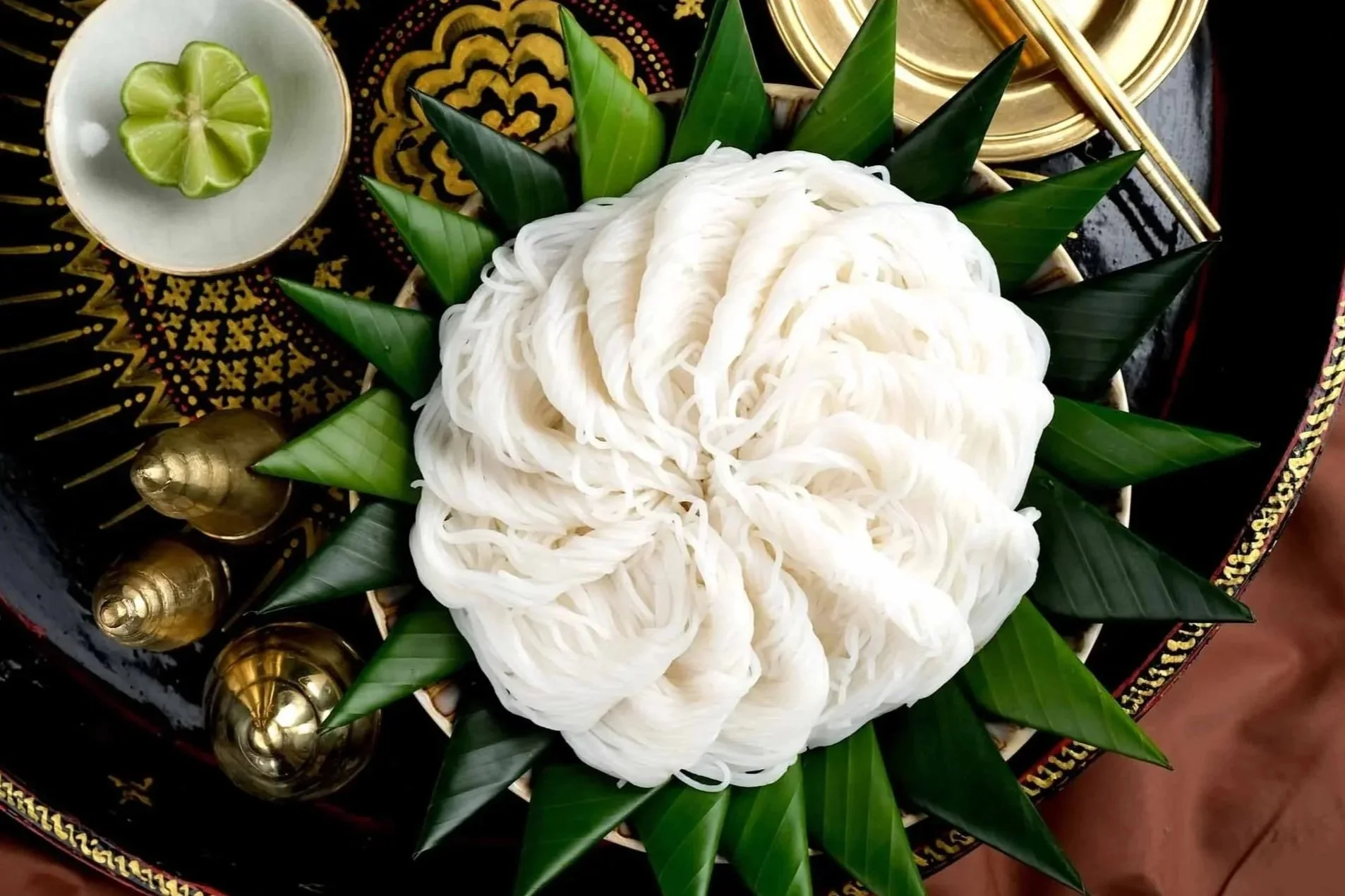
Num Banh Chok is one of the most iconic expressions of Cambodian food culture. It is woven into the rhythm of daily life and the memory of our land, carrying the depth of Khmer heritage through taste, texture, and ritual. Traditionally served with fresh vegetables, herbs, and carefully layered broths or sauces, Num Banh Chok reflects the freshness, balance, and distinctive character of Khmer cuisine.
Blessed with ideal geographic conditions, Cambodia has cultivated rice for thousands of years, making it not only a staple food, but also one of the great foundations of Khmer civilization. Num Banh Chok reflects the beauty of this relationship with rice: transformed into something soft, fresh, and elegant, with a delicate texture that pairs beautifully with curries, broths, tamarind sauces, or prahok-based dips, often enjoyed with grilled fish or beef.
Num Banh Chok is traditionally made fresh each day and eaten on the same day. It is not a dish meant to be kept for long, but one valued for its immediacy, softness, and freshness. This daily practice reflects not only the nature of the noodles themselves, but also a way of life deeply connected to rhythm, care, and the freshness of each day’s food in Cambodia.
Num Banh Chok also holds an important place in post-harvest celebrations and village life. During Dar Lein [ដារលាន], families would prepare or purchase generous amounts of fresh noodles, cook fragrant curries, and gather with relatives and friends from neighboring villages to celebrate the end of the harvest season. It was a time to honor hard work, give thanks to the ancestors who passed down this way of life, and ask for blessings for the season ahead.
More than just a noodle dish, Num Banh Chok carries a profound sense of community, place, memory, and quiet abundance that continues to nourish Cambodian identity across generations.
![A traditional Cambodian dish presentation with Numbanh Chok [Cambodian fresh rice noodle] with Namya Bangkong [thick crayfish curry] on a decorative tray.](https://images.squarespace-cdn.com/content/v1/62e142d43354ad73f5540791/28864609-8284-4b45-9286-0f135758d10f/Chef+Nak%27s+SAOY+Royal+Cookbook+Recipe.jpg)
Explore Phnom Penh’s Food Scene with Chef Nak
Cambodian cuisine is best understood not only through recipes and ingredients, but also through the markets, local eateries, family kitchens, and everyday dining traditions that shape how people eat.
In Condé Nast Traveler’s series, “Where You Should Eat in Phnom Penh According to a Pro Chef,” Chef Nak guides viewers through the city’s food scene, sharing the places, flavors, and stories that reveal the heart of Cambodian cooking today.
Watch the video to discover Phnom Penh through the eyes of a Cambodian chef and local food expert.